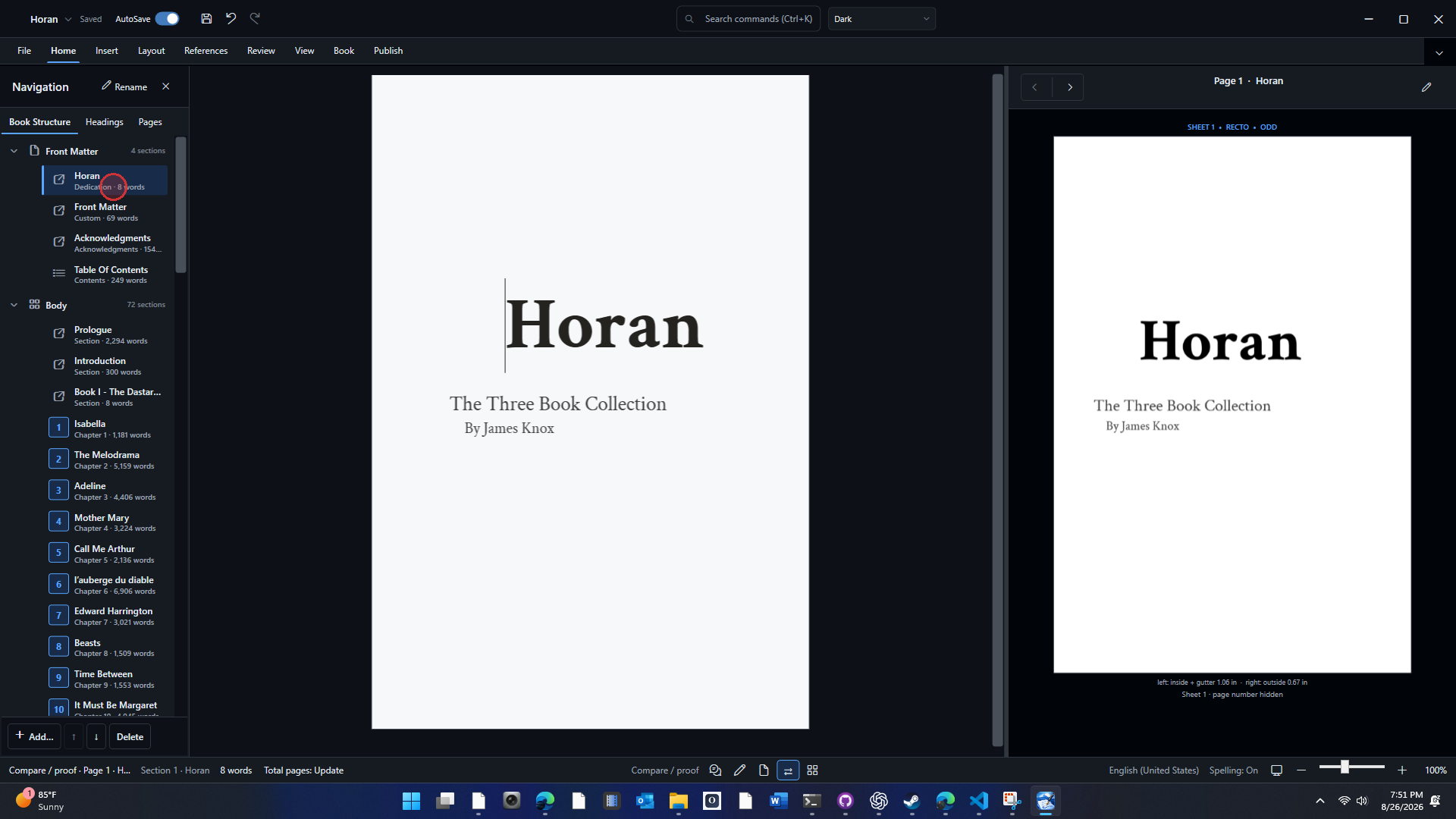
01 / Title matter
The book announces itself with restraint.
A centered title, collection line, and author credit establish the voice of the volume. The live comparison view keeps editable matter beside its composed print page.
 OYAMA Publish
A book made in Oyama Scribe
These are working proofs from James Knox’s Horan project—not generic templates. They show how Oyama Scribe carries structure, typography, mirrored margins, and running pages from manuscript to print.
A centered title, collection line, and author credit establish the voice of the volume. The live comparison view keeps editable matter beside its composed print page.
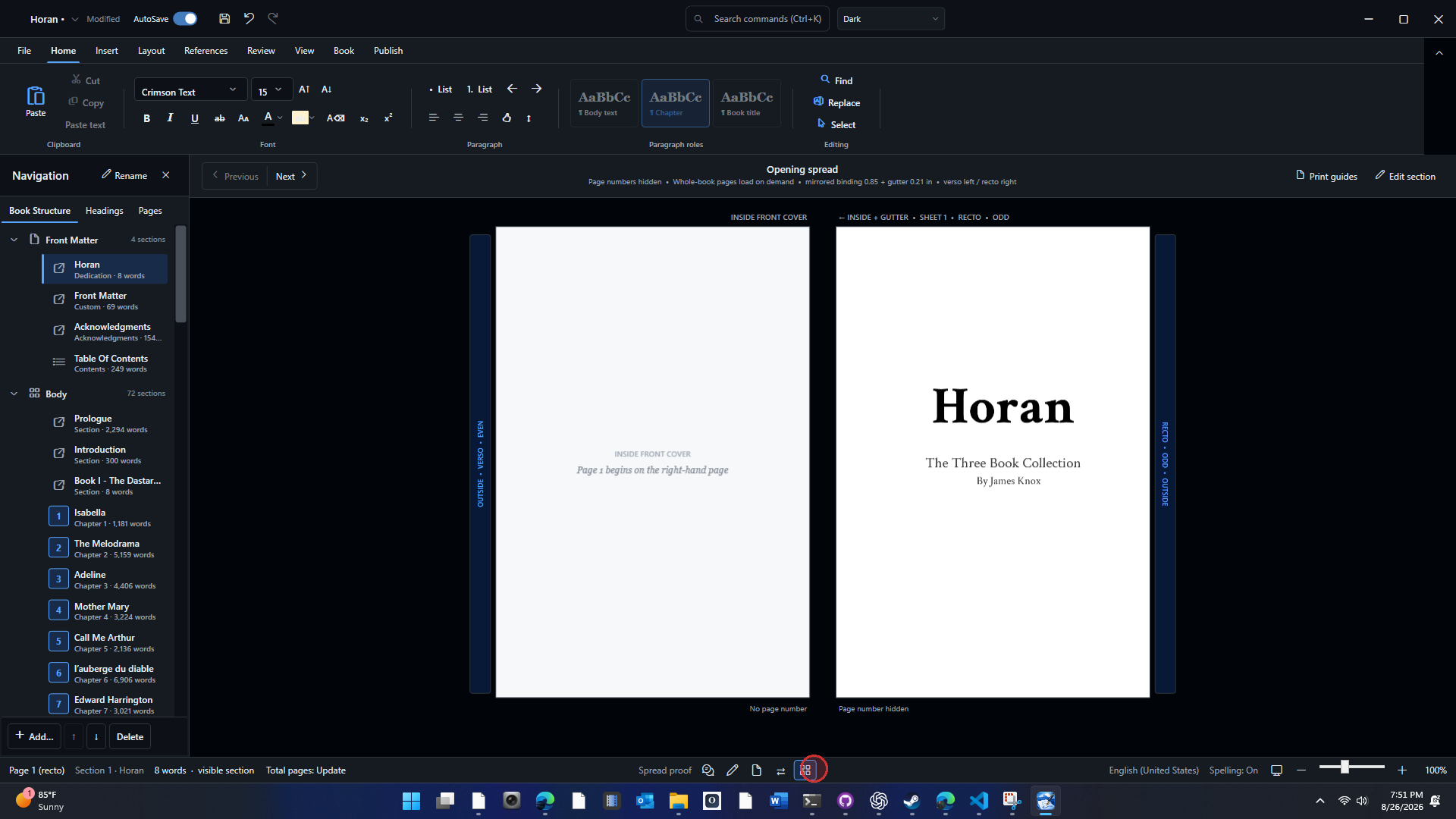
Recto-start rules, opening-page spacing, and suppressed running elements are handled as book structure—not as fragile manual blank lines.
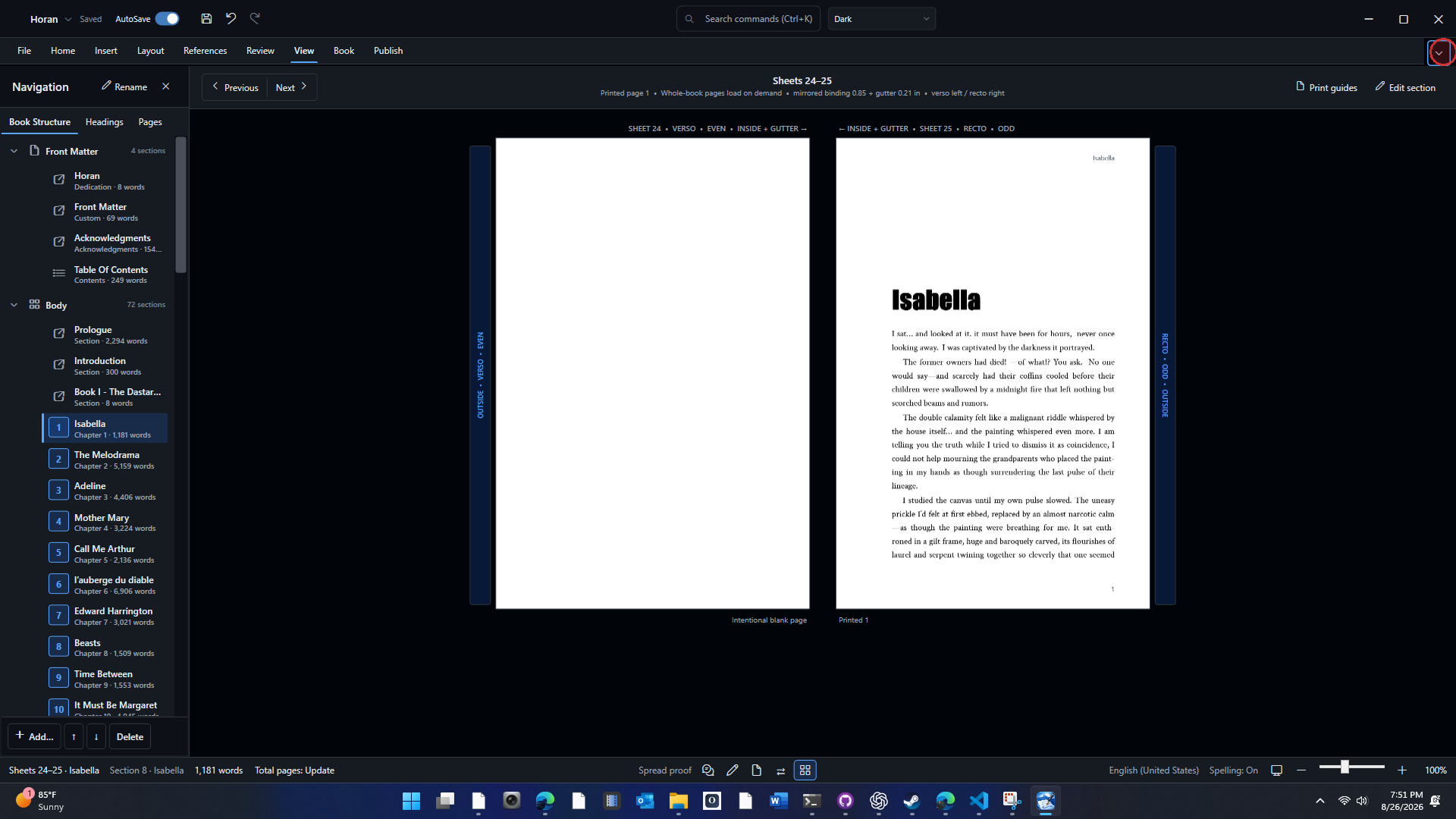
True spreads reveal the rhythm between verso and recto pages, including binding space, outside margins, running heads, folios, and paragraph flow.
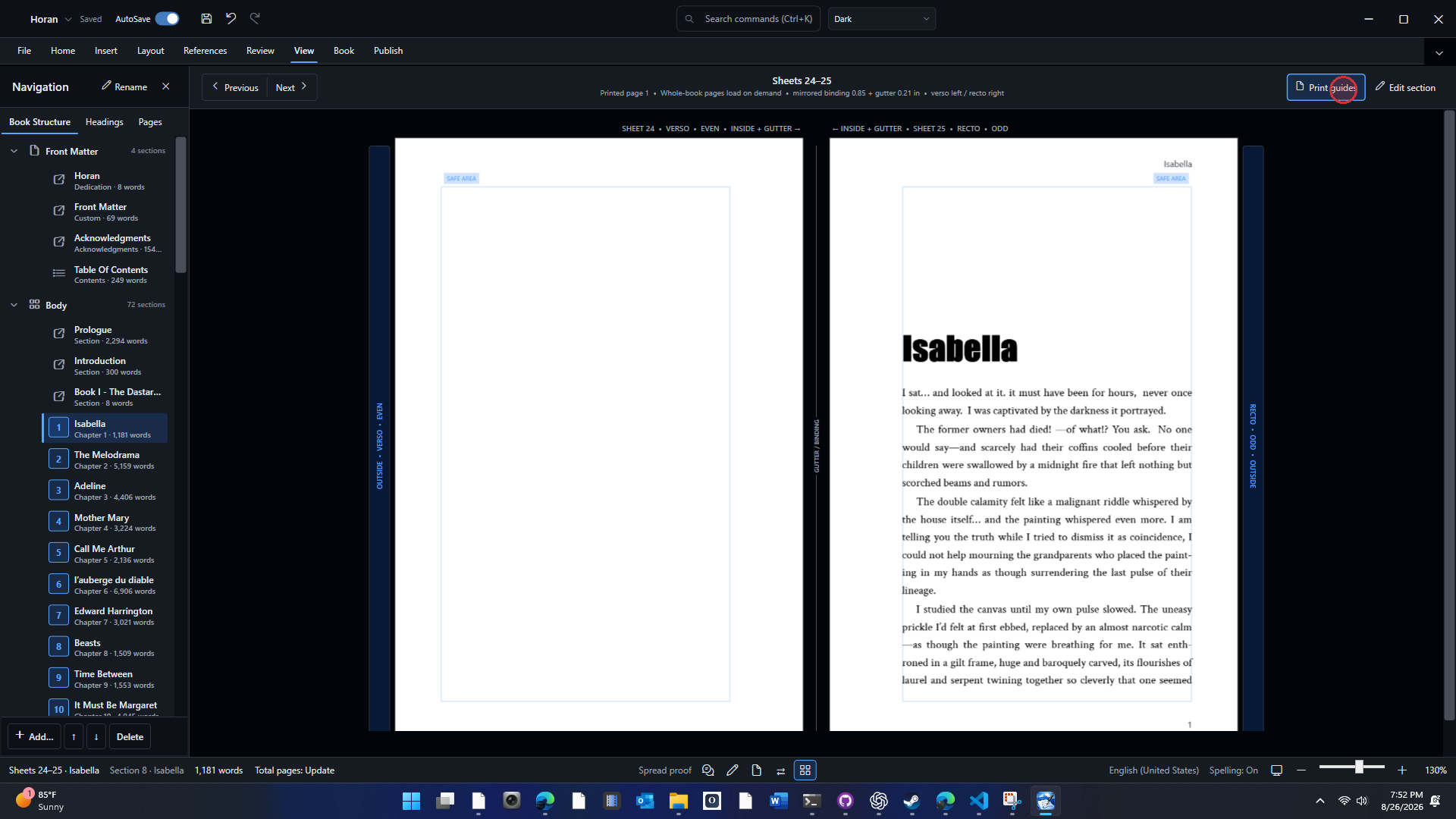
Optional print guides expose safe areas, text bounds, binding gutters, and outside edges so layout problems can be corrected before the PDF reaches a printer.
Horan is the proof that the manuscript and the printed object can stay in the same creative conversation.